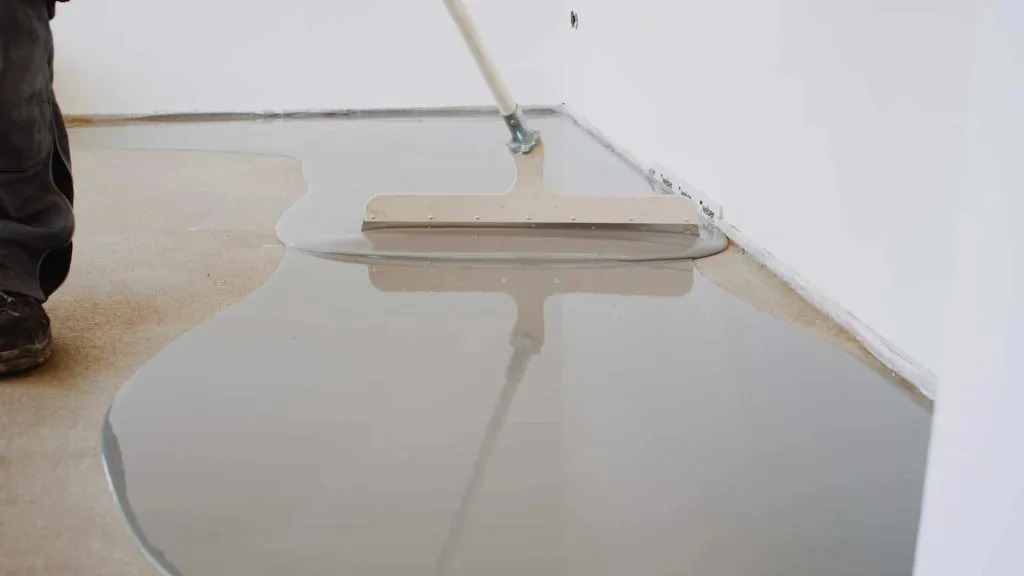


Key components include binders (cement or gypsum), fillers (quartz sand, calcium carbonate), superplasticizers, defoamers, and setting regulators.
HPMC provides water retention, thickening, and stability—preventing rapid drying, dusting, and material separation. Low-viscosity grades help maintain flow while reducing segregation.
RDP improves strength and durability by forming a polymer film, enhancing flexibility, crack resistance, bonding, abrasion resistance, and water/freeze-thaw performance.
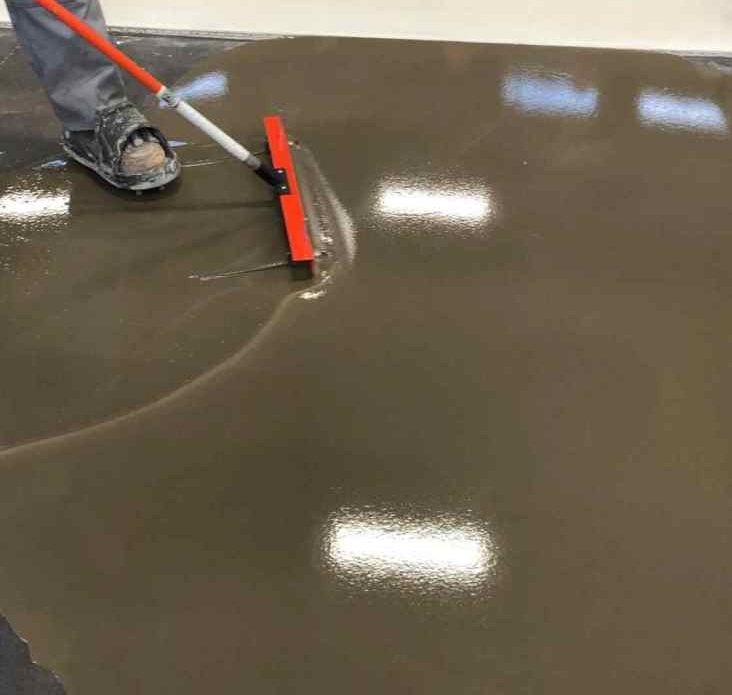
Requirements for HPMC, RDP, and Other Additives in Different Grades of Self-Leveling Compounds
The requirements for additives vary depending on the application scenario (thin-layer / thick-layer), setting time (standard / rapid-setting), and performance priorities (high flexibility / high wear resistance / high flowability). The following table outlines common grades and their corresponding additive requirements.
| Grade Category | HPMC Requirements | RDP Requirements | Other Additive Requirements |
| Standard Grade (Interior leveling, 3–10 mm) | Low viscosity (400–600 mPa·s) Moderate water retention; ensures good flowability | Medium Tg (5–10 °C) Dosage 3–5%; balances adhesion and flexibility | Superplasticizer: Standard dosage Defoamer: Standard addition |
| High Flowability Grade (Ultra-thin layer / pump application) | Very low viscosity (200–400 mPa·s) High flowability; non-sticking | Low Tg (0–5 °C) Enhances flexibility and crack resistance | Superplasticizer: High dosage, polycarboxylate type Defoamer: High-efficiency type to prevent pinholes |
| Rapid-Setting Grade (Early strength / short turnaround) | Modified HPMC Good alkali resistance; suitable for calcium aluminate cement systems | Medium Tg (5–10 °C) Moderate dosage; does not compromise early strength | Calcium aluminate cement: Blended with OPC Accelerator: Precisely adjusted |
| High Flexibility Grade (Underfloor heating / wood subfloors) | Low to medium viscosity (400–800 mPa·s) Good water retention; prevents cracking in thicker layers | Low Tg (–5–0 °C) High dosage (5–8%); provides high flexibility | Polypropylene fibers: Optional, for enhanced crack resistance |
| High Wear Resistance Grade (Industrial flooring / heavy-duty areas) | Medium viscosity (600–1000 mPa·s) Strong water retention for thicker applications | Higher Tg (10–15 °C) Delivers higher hardness and abrasion resistance | Silica fume / hard fillers: Increase surface hardness Superplasticizer: High water-reducing rate |
MIXEON Additives Solutions for Self-Leveling Compounds
MIXEON HPMC RE1004SF (Hydroxypropyl Methylcellulose)
Water Retention: Locks in mixing water to prevent rapid moisture evaporation during thin-layer applications, ensuring thorough hydration of cement or gypsum and avoiding surface dusting or insufficient strength.
Thickening and Anti-Settling: Increases paste viscosity to prevent sedimentation of solid particles and bleed water separation, ensuring a uniform, non-segregated surface after hardening.
Rheology Modification: Provides appropriate thixotropy, allowing the paste to flow easily during mixing and placement while leveling quickly after standing, without segregation.
MIXEON RDP BE7010N / BE5030N (Redispersible Polymer Powder)
Flexibility Enhancement: Forms a continuous polymer film within the mortar, absorbing stresses from substrate deformation, temperature fluctuations, and drying shrinkage, significantly reducing cracking risk—especially suitable for underfloor heating or thin-layer systems.
Improved Bond Strength: Enhances adhesion between the self-leveling compound and substrates such as concrete or heating pipes, preventing hollowing or delamination.
Durability Improvement: Fills capillary pores, increases surface abrasion resistance, reduces water absorption, and enhances freeze-thaw resistance, aging resistance, and water impermeability.
MIXEON PCE-1250 (Polycarboxylate Superplasticizer)
Efficient Dispersion: Utilizes electrostatic repulsion and steric hindrance to fully disperse cement particles, achieving high flowability at a very low water-to-cement ratio.
Increased Strength: Reduces water content, minimizes capillary porosity, and enhances the density, compressive strength, and flexural strength of the hardened material.
Improved Leveling: Provides exceptional flowability and self-healing properties, enabling automatic leveling over large areas with minimal manual intervention.