
EIFS/ETICS

EIFS/ETICS

The ETICS/EIFS System (Exterior Insulation and Finish System) is an innovative solution designed to effectively insulate the exterior walls of buildings. ETICS/EIFS can be used with two main types of insulation boards: fire-retardant EPS (expanded polystyrene) boards manufactured by Dira Almabani and rockwool (stone wool / mineral wool), depending on the project requirements. These insulation boards are fixed with a strong adhesive layer, then covered with a reinforced fiberglass mesh, and finally a durable finishing coat resistant to weather conditions.

Reliable performance for high-quality applications

Dongyuan Shengda Cellulose ether and RDP are important additives in EIFS/ETICS systems. Cellulose ether mainly improves water retention, workability, and anti-sagging performance, ensuring smooth application and proper cement hydration during installation.

RDP mainly enhances adhesion strength, flexibility, crack resistance, and water resistance. It improves the overall durability of the system, helping it withstand temperature changes and long-term weather exposure.
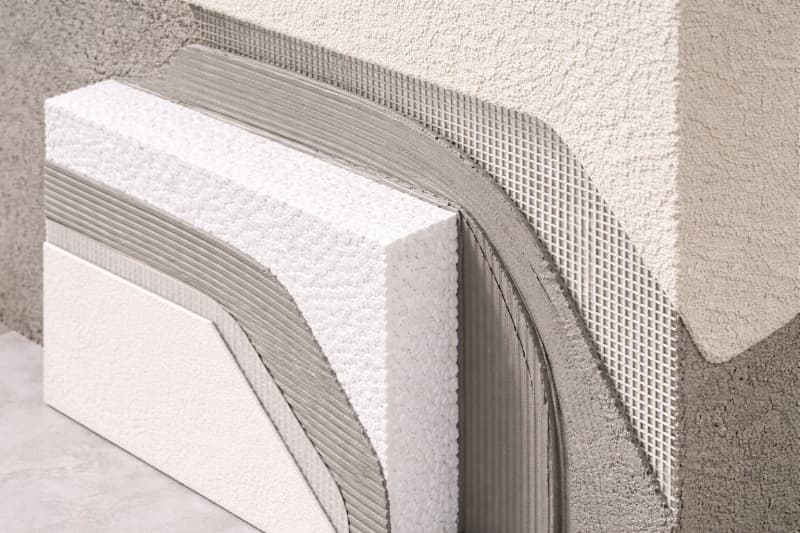
EIFS/ETICS

Innovative Additives for EIFS/ETICS

Hydroxypropyl Methyl Cellulose

Hydroxypropyl Methyl Cellulose (HPMC) is a water-soluble, non-toxic polymer additive. It is widely used in various industries due to its properties as a thickener, binder, film-former, emulsifier, and water retention agent, ensuring improved stability, efficiency, and performance across diverse industrial and commercial applications.

Hydroxyethyl Methyl Cellulose

MHEC (Methyl Hydroxyethyl Cellulose) powder is a non-ionic cellulose ether derived from natural polymer cellulose, acting as a thickener, binder, and high-performance water retention agent. It is widely used in construction materials (tile adhesives, dry-mix mortars, wall putty) to improve workability and durability.

Redispersible Polymer Powder

Redispersible polymer powder is a free-flowing white or light yellow powder made from vinyl acetate–ethylene polymer emulsion through high-temperature, high-pressure spray drying. When it comes into contact with water, it can form a stable polymer emulsion whose properties are the same as those of the original emulsion.